A warehouse licensed by the Saudi Food and Drug Authority (SFDA) is a facility that is subject to strict standards and regulations imposed by the authority to ensure the safety and quality of storage and handling of products such as medicines, medical devices, cosmetics, and food. These warehouses must obtain an official license from the authority after meeting all necessary conditions, including cleanliness, ventilation, and providing suitable storage conditions according to the nature of each product. Development Partners Co. for Logistics Services is considered one of the leading companies that offer storage services in warehouses licensed by the Saudi Food and Drug Authority (SFDA). It provides storage services and logistical support that comply with all conditions for storing medicines, medical devices, and cosmetics, in addition to product registration services and obtaining the necessary licenses for import and distribution.

التخزين لدى الغير يعني توفير خدمات التخزين لطرف ثالث. أي أن الشركة أو المؤسسة التي تقدم مساحات تخزينية تتيح للعملاء تخزين منتجاتهم دون الحاجة لامتلاك مستودع خاص بهم. هذه الخدمة تجعل الشركة المقدمة لخدمة التخزين مسؤولة عن الحفاظ على جودة وسلامة المنتجات المخزنة وفقًا للمعايير والشروط المطلوبة.


في عام 2019، أطلقت الهيئة العامة للغذاء والدواء خدمة “التخزين للغير”، التي تتيح للمستأجر الحصول على ترخيص مستقل لمزاولة النشاط نظامياً دون الحاجة لرخصة من البلدية أو الدفاع المدني، ودون الحاجة لامتلاك مستودع كامل. هذه الخدمة تساعد الشركات التي لا تتطلب مستودعات كبيرة في تقليل التكاليف.

للحصول على رخصة تخزين للغير في مستودع مرخص من هيئة الغذاء والدواء، يجب اتباع الخطوات التالية:
     1.     التأكد من استيفاء المعايير:
يجب أن يتوافق المستودع مع المعايير الخاصة بالتخزين الآمن للمنتجات مثل المواد الغذائية، الأدوية، مستحضرات التجميل، أو الأعلاف الحيوانية وفقًا لمتطلبات الهيئة العامة للغذاء والدواء.
     2.     تقديم طلب للحصول على رخصة:
يتم تقديم طلب للحصول على رخصة تخزين للغير عبر المنصة الإلكترونية لهيئة الغذاء والدواء. يتطلب الطلب مستندات مثل عقد الإيجار، السجل التجاري، وتفويض مقدم الطلب.
     3.     التفتيش والموافقة:
بعد تقديم الطلب، تقوم هيئة الغذاء والدواء بإجراء تفتيش للمستودع للتأكد من تطابقه مع المعايير المطلوبة. في حال استيفاء جميع المعايير، سيتم منح الرخصة.
     4.     دفع الرسوم:
تختلف الرسوم حسب النشاط والمساحة المطلوبة للحصول على الرخصة أو تجديدها.


شركة شركاء التطوير للخدمات اللوجستية، مرخصة من هيئة الغذاء والدواء السعودية لتقديم خدمات التخزين للغير، وتقديم الدعم والاستشارات في هذا المجال ، و نسعد  بتقديم خدماتنا لكم. للتواصل

Dear Partner, Yes, all warehouses of Development Partners Co. for Logistics Services are fully licensed by the Saudi Food and Drug Authority (SFDA). We recognize the importance of storing regulated products such as medicines, cosmetics, medical devices, and food in licensed warehouses to ensure compliance with the highest safety and quality standards. Storing products in an unlicensed warehouse can expose facilities and their owners to significant legal risks, including financial penalties, closure of the warehouse, or even criminal sanctions. Additionally, unlicensed warehouses may not comply with the required storage standards, which can affect the quality and safety of the products. At Development Partners Co., we are committed to providing a comprehensive and certified storage environment to ensure that products reach consumers with high quality and full effectiveness. Adhering to licenses and stringent standards ensures the preservation of the facility’s reputation and the trust of business partners, as well as facilitating the acquisition of appropriate insurance for stored products. Development Partners Co. for Logistics Services pays attention to all details and strives to store your products in warehouses licensed by the Saudi Food and Drug Authority, ensuring they reach the consumer in their high quality.
We specialize in storing products regulated by the Saudi Food and Drug Authority (SFDA) only, which include:     • Human Medicines     • Medical Devices     • Cosmetics We are committed to the highest safety and quality standards to ensure the effectiveness and safety of these products throughout the storage period.
No, in order for us to receive your goods in our warehouses, a warehouse license (third-party storage) must be obtained in advance by the partner. This license ensures compliance with the standards and regulations set by the Saudi Food and Drug Authority (SFDA) to guarantee the safety and quality of the stored products.
According to the instructions of the Saudi Food and Drug Authority, the duration of the storage contract is only one year. After this period ends, the contract is renewed with a new storage agreement to ensure continued compliance with safety storage standards and regulations.
أقل مساحة للتأجير تعتمد على نوع المنتجات المخزنة:
     •     الأجهزة والمستلزمات الطبية: 1 متر.
     •     مستحضرات التجميل: 10 متر.

The unit of measurement for storage in our warehouses is the meter, taking into account the dimensions of one meter for storage in accordance with the conventional storage units.

Dimensions shown in the picture are per meter:
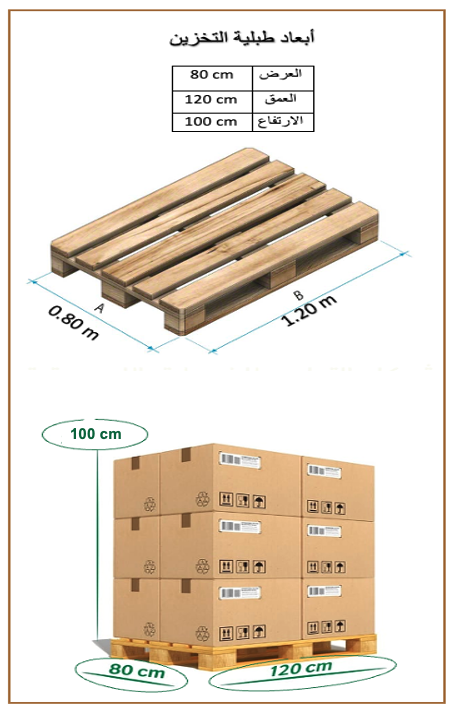

Yes, we offer loading and unloading services (for large quantities) and provide a (forklift truck) for a nominal fee, which is paid with each operation.
Our lease contracts are annual, and the full contract amount is to be paid after signing via bank transfer to the company’s account only. We would like to emphasize that no cash amounts are accepted.
All our warehouses are currently located in Riyadh, and branches will soon be opened in other cities, and our partners will be notified accordingly.

Yes, this service is provided after signing storage contracts, where we offer product registration and listing services with the Saudi Food and Drug Authority. We provide these services through licensed offices that have been contracted to offer the best rates for our partners. You can visit the following link for more details: Licensing Services page.

Yes, at Development Partners Logistics Services, We provide full warehouse rental services dedicated to large companies that require independent and private storage spaces. We offer fully equipped and licensed warehouses from the Saudi Food and Drug Authority (SFDA) to meet all your storage needs according to the highest quality standards. .

Renting storage space means that you are renting a portion of a warehouse that offers third-party storage services, where you can store your products such as medicines, medical devices, and cosmetics. These spaces are typically measured in cubic meters or by the number of pallets, providing a safe environment that complies with the necessary standards and conditions for product storage without the need to own a private warehouse. In addition to storage, we offer additional services such as completing registration procedures with the Food and Drug Authority and consulting related to import and distribution. This type of service is suitable for companies that need flexible or temporary storage, or that wish to avoid the high costs associated with building and managing a private warehouse. At Development Partners Co. for Logistics Services, we provide multiple options for storage spaces to meet the diverse needs of our partners. Renting storage space is an ideal choice for small and medium-sized businesses that require flexibility in inventory management and adaptation as their business grows without incurring high costs. You can contact one of our staff members for more options.
Licensed warehouses by the Saudi Food and Drug Authority (SFDA) are warehouses that are subject to strict standards and regulations imposed by the authority to ensure the safety and quality of storage and handling of products such as medicines, medical devices, cosmetics, and food. These warehouses must obtain an official license from the authority after meeting all necessary conditions such as cleanliness, ventilation, and providing appropriate storage conditions according to the nature of each product. Development Partners Co. for Logistics Services is one of the leading companies that offer storage services in warehouses licensed by the Saudi Food and Drug Authority (SFDA). It provides storage services and logistical support that comply with all the requirements for storing medicines, medical devices, and cosmetics, in addition to product registration services and obtaining the necessary licenses for import and distribution.

Our services depend on reserving a specific space in our warehouses and obtaining storage and import licenses based on these spaces registered in the warehouse data with the Saudi Food and Drug Authority (SFDA). These spaces are at the partner’s disposal throughout the contract period.
We recommend that all our partners keep and store products in designated locations approved by government agencies, to ensure that they reach the consumer in a fit-for-use condition.


There are requirements set by the Saudi Food and Drug Authority (SFDA) for obtaining a warehouse license for pharmaceuticals and herbal products, which include: 1. Commercial Register: The commercial register must include the required activity according to the approved economic activities and must be issued from the same administrative region as the facility’s location. 2. Municipal and Civil Defense Licenses: The warehouse must have a municipal license and a civil defense license to ensure compliance with regulatory requirements. 3. Contract with a Pest Control Company: There must be a contract with a specialized pest control company to maintain a safe storage environment. 4. Qualified Saudi Technical Manager: A qualified Saudi technical manager must be appointed according to the requirements of the SFDA. 5. Contract with a Company for Safe Disposal of Medical and Chemical Waste: There must be a contract with a specialized company for the safe disposal of medical and chemical waste. The application is submitted via the “Ghad” platform of the Food and Drug Authority, and the license is valid for five years, with a fee of 3,000 SAR. If your facility wishes to rent a fully equipped warehouse that meets all requirements, you can check the complete warehouse rental section in our large enterprises services. You can also view the details of the licensing services we provide through the licensing services section.
Our services are not limited to warehouse rentals only. We have expanded our range of services to be comprehensive for our partners, in partnership with the best licensed offices from the Saudi Food and Drug Authority to provide the following services:     • Opening accounts with the Saudi Food and Drug Authority.     • Obtaining import licenses.     • Product registration and marketing permits.     • Registering facilities in the Medical Device National Registry (MDNR).     • Obtaining facility licenses (MDEL-I/D).     • Obtaining legal representative licenses for manufacturers (MDEL-AR).     • Obtaining quality system certification (ISO 13485).     • General consulting to ensure compliance with regulatory requirements.
When you decide to search for a warehouse licensed by the SFDA for rent, you should consider several factors to ensure the selection of the appropriate warehouse for your needs. Here are some important points to consider: - Location: Choose a warehouse located in a strategic area suitable for your supply chain, close to major roads to reduce future transportation costs. - Government Licenses: Ensure that the warehouse you wish to rent storage space in has all the necessary licenses from the SFDA, the municipality, and civil defense, and that it complies with all regulations for the type of goods you intend to store (such as medicines, food, and medical devices). - Essential Equipment: Look for warehouses that are fully equipped and free from structural defects (such as water leaks and the type of paint used on walls and floors that can promote bacterial and fungal growth). Make sure they are equipped with temperature and humidity control systems if the products you are dealing with are sensitive to environmental conditions. Also, ensure there are security measures like surveillance cameras and alarm systems. - Space and Future Expansion: Choose a warehouse that provides enough space for your current and future needs. Consider the potential for expanding the space according to changes in your future business volume. - Cost: While it is natural for many to look for the lowest cost, always compare the rental costs of warehouses with the services provided. Consider all additional costs such as maintenance, security, insurance, storage quality, and the loading and unloading of goods. - Contract Flexibility: Examine the terms of the contract carefully, including the rental duration and renewal conditions. The contract should be flexible enough to adapt to market changes and business needs. - Reviews and Ratings: Look for reviews and evaluations of the companies providing the services. Previous tenants’ opinions and experiences can give you a good idea of the service level and potential issues. - Site Visit: Visit the selected warehouses for a personal assessment before making a final decision. Focus on how the space is organized, cleanliness, and the safety systems in place. Also, check for wide and suitable access and loading/unloading routes for the type of goods you plan to store. Visiting the site can reveal details that may not be clear in photos or descriptions provided by the companies, such as the quality of maintenance and the effectiveness of daily operations. It also allows you to ask questions directly to the manager or staff and receive immediate answers that help evaluate whether the warehouse meets your expectations and requirements. In summary, when choosing a warehouse licensed by the SFDA for rent, it is important to consider a variety of factors, from location and equipment to cost and contract. Ensure you conduct a comprehensive and thorough evaluation of the available options to guarantee the selection that best meets your needs and expectations. At Development Partners Co. for Logistics Services, we always strive to achieve our partners’ visions and help them reach their business goals at the lowest cost and highest quality in our warehouses, which we continually work to make the best place for storing your products.
Registering a medical device with the Food and Drug Authority requires following several steps and procedures according to the guidelines set by the Saudi Food and Drug Authority (SFDA), which oversees this process to ensure the safety and effectiveness of medical devices. Here are some essential steps and main requirements: 1. Obtain a Facility License: A license for the import and distribution of medical devices must be obtained to ensure the legality of the import. 2. Classification of the Device to be Registered: The medical device is classified based on the level of risk associated with it, which is necessary before registering the product with the SFDA. 3. Documentation and Approvals: In some cases, you may need to provide approvals such as CE Marking or SFDA approval based on the classification of the medical device. 4. Electronic Registration: The device must be registered through the electronic registration system for medical devices (MDNR) affiliated with the SFDA. 5. Submit Required Documents: Required documents include quality certificates, clinical studies, and technical reports that demonstrate the safety and effectiveness of the device. 6. Local Agent: A local agent must handle the registration process and communication with the SFDA to ensure a smooth operation. 7. Inspection and Evaluation: Medical devices may be subject to inspection and evaluation by the authority to ensure compliance with the required standards. 8. Periodic Follow-up: After obtaining a license from the SFDA, it is essential to maintain quality and safety standards and update documents as needed. 9. Registration Fees: The fees for licensing by the SFDA depend on the classification of the device and the type of registration: • Class I = 15,000 SAR • Class II A = 19,000 SAR • Class II B = 21,000 SAR • Class III and IV = 23,000 SAR These are the basic steps for registering a medical device. We recommend contacting the SFDA directly or consulting our specialized advisors to assist in obtaining licenses and ensuring compliance with the SFDA licensing conditions.
In 2019, the Saudi Food and Drug Authority (SFDA) launched the “Third-Party Storage” service, which allows tenants to obtain an independent license to operate legally without the need for a municipal or civil defense license, and without the necessity of owning an entire warehouse that may not fit the scale of their business activity. According to the information provided by the authority on its website, here is a simplified overview of the requirements for obtaining a warehouse license (third-party storage): 1. Commercial Register: • The commercial register must include the required activity according to the approved economic activities and must be issued from the same administrative region as the facility’s location. 2. Lease Agreement: • A signed lease agreement with the warehouse owner must exist, specifying the rented area, along with all clauses outlining the obligations of the tenant and the leasing company. 3. Required Spaces: • The minimum rented area for third-party storage is: • Food: 20 square meters. • Medicines: 20 square meters. • Cosmetics: 10 square meters. • Medical Devices: Not specified. 4. Application for Licensing: • The application is submitted via the Ghad platform of the SFDA, and the license is valid for one year. Upon approval from the authority, the license will be issued. If your facility wishes to rent a partial space (third-party storage), you can check the partial space rental section. You can also explore our services and view the available prices and offers.
There are requirements set by the Saudi Food and Drug Authority for obtaining a cosmetics warehouse license, which include: 1. Commercial Register: The commercial register must include the specific activity for cosmetics according to the approved economic activities and must be issued from the same administrative region as the facility’s location. 2. Municipal and Civil Defense Licenses: The warehouse must have a license from the municipality and a civil defense license to ensure compliance with safety requirements. 3. Product Transport and Distribution Agreement: There must be an agreement for transporting products or the presence of refrigerated vehicles owned by the facility that are equipped to transport cosmetics according to the required standards. 4. Saudi Warehouse Manager: A qualified Saudi technical manager must be registered to manage the warehouse according to the authority’s requirements. 5. Application via the Ghad Platform: The application for obtaining a warehouse license is submitted through the Ghad platform of the Food and Drug Authority, and the license is valid for five years, with a fee of 3,000 SAR. If your facility wishes to rent a fully equipped warehouse that meets all requirements, you can check the complete warehouse rental section (Large Enterprises Services). You can also explore the details of the licensing services we provide through the Licensing Services section.
There are requirements set by the Saudi Food and Drug Authority (SFDA) for obtaining a warehouse license for medical devices and products, which aim to ensure safe storage and compliance with health and legal standards. The requirements include: 1. Commercial Register: The commercial register must include the activity related to the import and storage of medical devices and must be issued from the same administrative region as the warehouse location to ensure compliance with the SFDA licensing conditions. 2. Government Licenses: The warehouse must have a municipal license and a civil defense license to ensure the safety of the building and its compliance with the standards set by the relevant government authorities. 3. Lease Agreement or Ownership Deed: A lease agreement or ownership deed for the warehouse must be submitted as part of the warehouse licensing procedures, according to the authority’s requirements. 4. Saudi Technical Manager: It is required to appoint a qualified Saudi technical manager registered with the SFDA to manage the warehouse and ensure compliance with health and legal standards. 5. Application via the Ghad Platform: The application for obtaining a warehouse license is submitted through the Ghad electronic platform of the Saudi Food and Drug Authority. After submitting the application, you can track its status through the platform to ensure that all conditions are met. 6. License Duration and Fees: The license duration is five years, and the fee for obtaining the SFDA license is 4,000 SAR. The license must be renewed before the expiration period to ensure the continuation of activities legally. If your facility needs to rent a warehouse licensed by the SFDA for medical devices, you can visit the complete warehouse rental section within the large enterprises services. You can also check the details of the licensing services and related services in the licensing services section.
Importing cosmetic products into Saudi Arabia requires full compliance with the applicable regulations and procedures designed to ensure product safety and quality before products enter the local market. The Saudi Food and Drug Authority (SFDA) is the regulatory authority responsible for this sector, setting clear requirements to ensure that imported products comply with both national and international standards. Requirements for Importing Cosmetic Products into Saudi Arabia - Product Registration Cosmetic products must be registered with the Saudi Food and Drug Authority in order to obtain the required approval. - Import Licenses The necessary import licenses must be obtained from the relevant authorities before starting the import process. - Required Documents 1- International quality and conformity certificates. 2- Details of the product ingredients and classification. - Compliance with Safety Regulations All imported products must be free from prohibited substances and must comply with the applicable safety and quality standards. The Role of Development Partners in Facilitating Imports: At Development Partners Co. for Logistics Services, we provide specialized services to support clients throughout all stages of importing cosmetic products, including: Assistance with Licensing - Full support in preparing the required documents for SFDA licensing. - Following up on the registration process and ensuring that products comply with the applicable regulations. Licensed Storage Solutions - Fully equipped cosmetic product warehouses licensed by the Saudi Food and Drug Authority to store products safely and in compliance with regulatory requirements. How to Import Cosmetic Products Successfully Understand the Requirements and Regulations Review the Saudi Food and Drug Authority’s requirements and ensure that all applicable standards are met. Work with Trusted Partners Choose approved manufacturers and suppliers in the country of origin to ensure a smooth and reliable import process. Prepare in Advance Prepare all required documents and licenses before shipping the products to avoid delays. Importing cosmetic products into Saudi Arabia is a process that requires accuracy, regulatory knowledge, and practical experience to ensure compliance and successful market entry. With Development Partners Co. for Logistics Services, you receive the support you need to manage this process efficiently and professionally. Contact us today to learn more about our services and how we can support you at every stage of importing cosmetic products.
Requirements and Procedure for Registering a Medical Device with the Saudi Food and Drug Authority (SFDA): 1. Obtain a Facility License: The facility registering the device must have an import or distribution license for medical devices issued by the SFDA, which requires a licensed warehouse license. 2. Classification of the Medical Device: The medical device is classified based on its level of risk according to the authority’s regulations. Medical devices are typically classified into four categories based on usage risk: (Class I, Class IIa, Class IIb, Class III). 3. Registration via the Ghad Platform: The registration request must be submitted through the Ghad electronic platform of the SFDA by creating an account and registering the facility. 4. Required Documents: • Submit documents that include: • Certificate of Conformity (CE or SFDA) if available. • ISO 13485 certificate proving that the company has an accredited quality management system. • Clinical studies and technical reports demonstrating the safety and effectiveness of the device. • A list of components and specifications of the medical device. 5. Appointment of a Local Agent: Foreign companies must appoint a certified local agent in the Kingdom for registration and communication with the authority. 6. Payment of Fees: Fees vary based on the category of the medical device to be registered. Fees start at 15,000 SAR and increase according to the device’s level of risk. 7. Inspection and Review: The authority may conduct an inspection of the manufacturing or storage sites of the device to verify compliance with quality and safety requirements. 8. Follow-up After Registration: After the registration is accepted, the facility must adhere to quality standards and maintain ongoing communication with the SFDA to ensure that data is updated if any changes occur regarding the device. Summary Steps for Registering a Medical Device: 1. Create an account on the Ghad platform. 2. Submit the device registration request through the platform along with the required documents. 3. Wait for the authority to review the submitted documents. 4. Receive final approval upon meeting all conditions. These are the key essential steps for registering a medical device. It is advisable to contact the Saudi Food and Drug Authority directly at 19999 or consult our specialized advisors for complete details and assistance in registering your products.
To register or list a cosmetic product with the Saudi Food and Drug Authority, companies must adhere to several requirements and essential steps to ensure compliance with standards. The registration is done through the Ghad electronic platform, which allows the submission of the required information for cosmetic products. Here are the requirements: 1. Electronic Registration via the Ghad Platform: • An account must be created on the Ghad platform affiliated with the Food and Drug Authority. After that, the product must be registered, and all required information must be entered. 2. Ingredients: • The product’s ingredients must comply with the lists of permissible ingredients set by the Food and Drug Authority. The product should not contain any prohibited or harmful substances, and the list of ingredients must be clear and documented. 3. Labeling: • A picture of the packaging and product label must be attached, including all necessary information, such as: • List of ingredients. • Manufacturing and expiration dates. • Manufacturer’s name. • Usage instructions. • The information must be written in both Arabic and English. 4. Notification and Approval: • After submitting the complete file, the authority reviews the documents and issues a notification of approval if the product meets the conditions. This notification allows the company to market the product in the Saudi market. 5. Fees: • The process of registering cosmetic products is currently free, but it is always advisable to check for updated fees via the Ghad platform. Summary Steps for Registering a Cosmetic Product: 1. Create an account on the Ghad platform. 2. Submit the product file with all required documents. 3. Wait for the authority to review the submitted file. 4. Obtain approval to start marketing the product. To successfully complete the registration or listing process for a cosmetic product, it is advisable to contact the Saudi Food and Drug Authority for accurate and updated information or consult our specialized advisors for assistance to ensure the process is completed correctly.